“A people or church that forgets its martyrs does not deserve to survive”. Pedro Casaldáliga.
Keeping the memory of Teresa Grigolini, Concetta Corsi, Eulalia Pesavento, Amalia Andreis, Fortunata Quasce, Elisabetta Venturini, Maria Caprini, Caterina Chincarini, and all their fellow prisoners, is to accompany from the inside every step, every event, every torture, every gesture, it is to read in their lives faith, hope and charity.
A story with lights and shadows, but with great strength born of vulnerability and fragility. God’s grace is manifested here.
This living memory is nourishment for our spirituality and challenges us to remain faithful with gratitude and commitment, in all circumstances of vocation and mission.
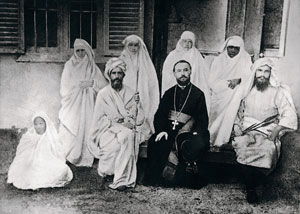
Let us enter into this sacred land of our sisters with bare feet, and grateful hearts.
Objective:
To hand over with witness and fidelity to God and mission, the legacy of our martyrs to new generations and thus continue to write the history and the passage of God in our lives and in the life of the people.
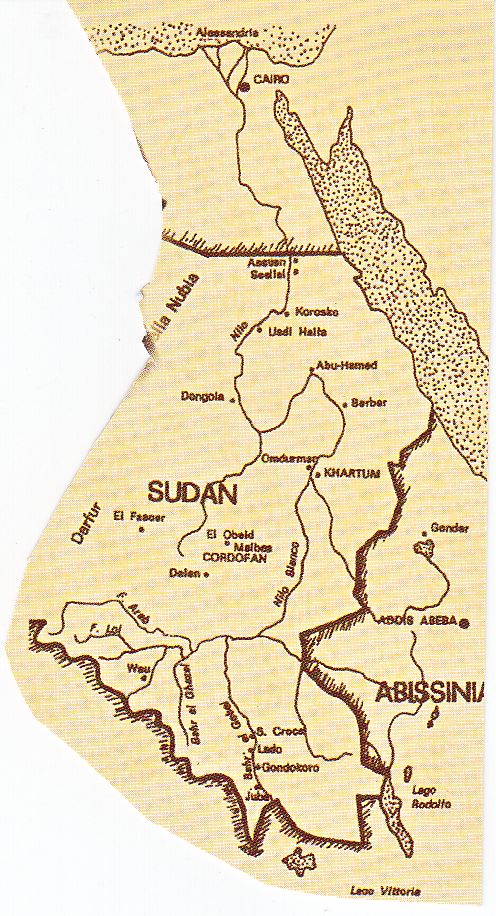
WITHDRAWAL FROM KHARTOUM
“After a journey of 33 days, not without danger and inconvenience, our people arrived in Cairo on 14 June…. The married Moors stayed in a rented house, the boys and girls retired to the Mission’s establishments”. (Nigrizia, julio,1884, p.127)
Follow the story in AMN 22 p. 55 -86
Elizabetta Venturini
From her diary
“With the fall of El-Obeid, Major Gozzi noted, the whole of Kordofan, except for some mountainous regions of Nuba, remained the uncontested territory of the Mahdi. In fact, having established in that city the headquarters of his government,[…] he dedicated himself to the political preparation of the extension of the revolution, to conquering Khartoum and to implementing his plans for the reform of religion and of the submission of the world to Islam” (p.220)
Leggi AMN 18, 69-98 | AMN 11, 51-83
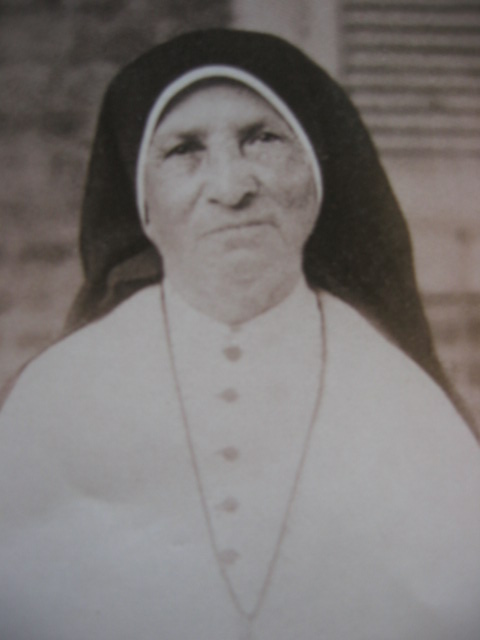
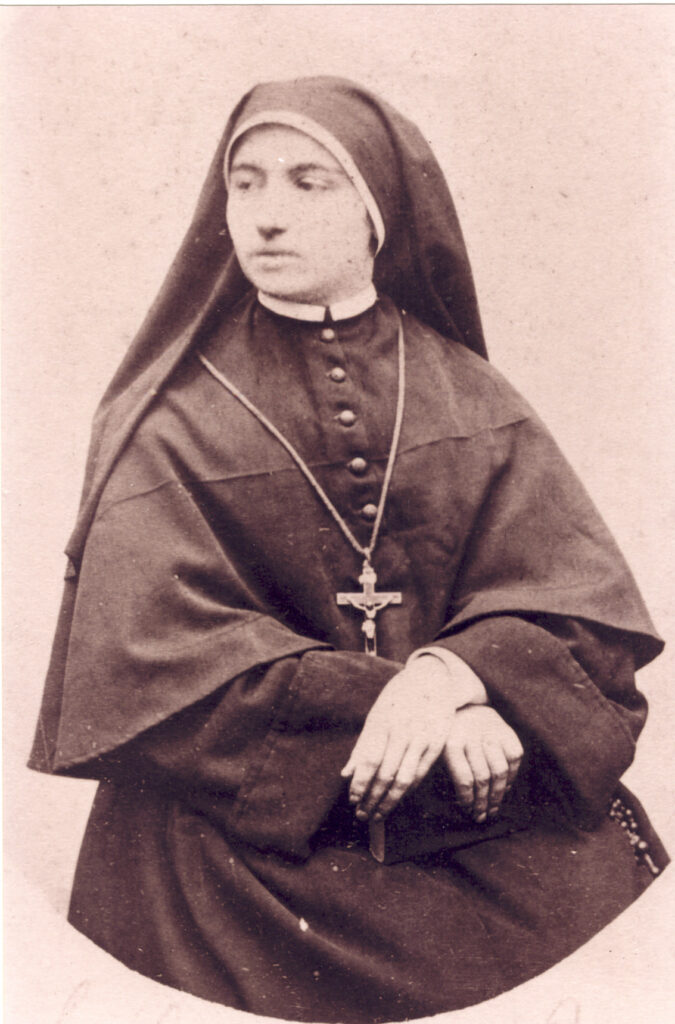
Teresa Grigolini
Reading Teresa’s story, we are infected by the strength and generous charity of a woman who has overcome the litany of abandonment, humiliation, sacrifice, disappointment and loneliness…. And yet, from this mountain of sadness and pain, there shines for her a hope, the hope of a God who does not abandon her: “Mother, be calm and fear nothing, for the Lord never lets those he loves perish” (IT-AMN 6, p. 198).
Read also AMN 6 p. 198ss
Contemplation Time
“The body was in pieces, but the moral pains were much more unbearable. The great weakness had caused us to lose a little of our intellect.
At the beginning of our captivity we prayed fervently and our minds were always fixed on God.
We were happy to suffer for the cause of the Kingdom of Christ.
We felt that the Lord was with us and our hearts were filled with peace and sincere joy.
Then night fell, a night without stars: it was the agony of the spirit, with no shadow of comfort.
At the beginning, the kicks and beatings were sweetness to be endured: the idea of being able to witness with blood our love for Christ, so longed for in the period of our formation, sustained us and gave us strength and courage.
The education to the Cross received from our founder and the desire for martyrdom, which seemed so close to us, encouraged us to endure everything.
But the long-awaited death did not come and we were in the clutches of the Mahdi.
Then, almost insensibly, prayer bloomed on our lips: united we began a triduum to the Sacred Heart of Jesus, asking him to save us from the teeth of the beasts and to help us to remain faithful”.
(Tutti sapevano che ero stata suora” pag. 150)
- What would you like to share about what has touched your heart and challenges you the most?
- Express it creatively: with a drawing, a poem, write your own psalm, etc.
The runaway (1885-1891)
As soon as Fr. Bonomi achieved the liberation, he was concerned about those who had remained in slavery. He sent guides and camels to the place in sufficient numbers for the liberation. They chose Fortunata, because she was African and at great risk of being sold into slavery, and Maria Caprini, who had been in prison the longest. They travelled day and night to put more and more space between possible persecutors. At a certain point the sisters, in order not to fall off because of fatigue, tied them to the camel.
On 22 October 1885, a telegram from Dongola announced to Cairo that the two sisters had arrived safely in Abasce, and the same day the news was sent to Verona. The last to be released were Caterina and Elisabetta with P. Ohrwalder, 29 November 1891.
Reading
AMN 18 pp. 99-151 | Read also IT- AMN 11, pp.85-106
Write in your Journal
At the end of this module on the Mahdia and following step by step the testimony of the sisters, could you make a resolution to go deeper and confront your own life in the light of the legacy left by our sisters, that they may be a light in your Comboni vocation.
- To what does the witness of their lives invite you today?
- What feelings dwell in your heart in all that our sisters have lived during this time of captivity?